Project of S. Seifullin Kazakh Agrotechnical Research University
IRN AP19174684
Project relevance
Among all factors affecting animal productivity and production costs, feeding has the greatest impact. In the cost structure of livestock products, depending on animal species and age–sex groups, feed expenses account for 50–70%. To reduce energy costs for feeding, preliminary feed processing is carried out in animal husbandry to ensure ration balance and improve nutrient digestibility. Depending on the adopted feeding system and availability of economically viable components, feed mixtures are formulated.
An important direction in feed production development is the production of complete, environmentally safe compound feeds, as well as ensuring protein supply of plant and animal origin for compound feed manufacturing. In European countries, about 45% of grain raw materials are used for compound feed production. Therefore, along with improving product quality, rational use of raw materials is of great importance. This task is addressed through the application of modern resource- and energy-saving processing technologies for traditional raw materials and the development of technologies providing rational substitution of key components.
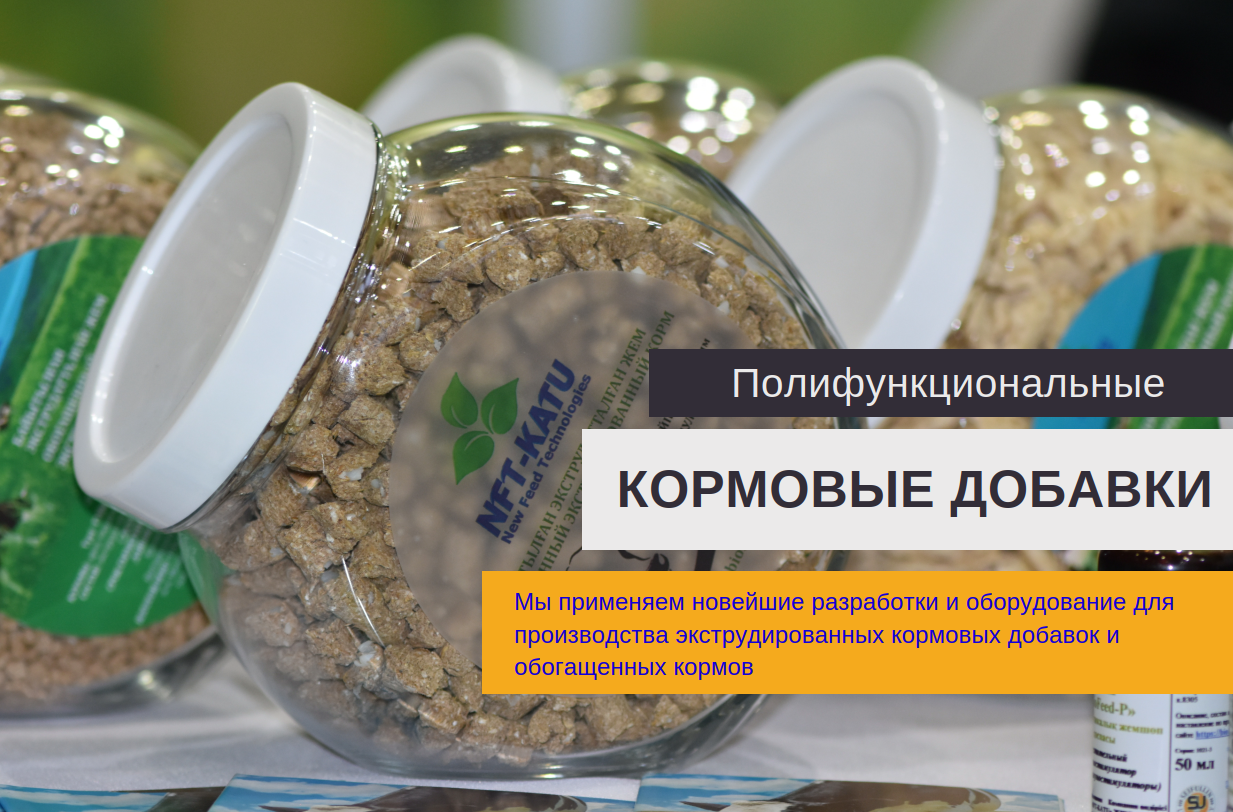
An effective and economically viable method for increasing the nutritional value of cereal and legume feed components is the production of extruded products based on multicomponent mixtures. Recently, considerable attention has been paid to the use of natural feed additives in animal diets, balanced in macro- and micronutrients and characterized by high nutritional and feeding value. Potatoes and potato processing by-products, which possess valuable nutritional properties, are effectively used in animal feeding and serve as a good substitute for cereal grains.
The essence of extrusion lies in subjecting raw materials to short-term but highly intensive mechanical and barothermal treatment under high temperature and pressure, resulting in changes in the structural-mechanical and chemical composition of the raw material. During extrusion, starch gelatinization occurs, its content decreases by 12%, while sugar content increases by 14%. High-molecular polysaccharide starch, the main component of potato raw material, is hydrolyzed into simple monosaccharides and dextrins. Due to the short processing time, protein does not coagulate, which allows vitamins and nutrients to be preserved.
Toxic substances decompose into inactive compounds and cease to be hazardous. A sharp pressure drop at the extruder outlet causes expansion of the heated feed mass, significantly increasing its digestibility. Due to deformation processes in the extruder, additional mixing and grinding occur. Moreover, during extrusion, moisture content can be reduced by up to 50% of the initial level, making it possible to include high-moisture components such as potatoes in compound feed formulations.
One of the promising areas in extruded feed production is the development of formulations using non-grade potatoes. In the Republic of Kazakhstan, potato production in 2021 amounted to 4,031.6 thousand tons, with a sown area of 195.8 thousand hectares and a yield of 207.4 centners per hectare.
According to economic standards, about 8% of the gross potato yield is disposed of as non-grade or unmarketable potatoes unsuitable for sale and storage, amounting to approximately 300 thousand tons. This volume is not processed by producers and is simply removed to fields.
The development of feed formulations containing non-grade potatoes will significantly reduce disposal volumes and decrease the cost of compound feeds used in animal nutrition. The use of extruded feed containing non-grade potatoes increases animal productivity by improving feed digestibility, as confirmed by studies of various researchers.
Project objective
To develop a technology for extrusion of non-grade potatoes and to conduct a veterinary and sanitary assessment of the quality and safety of livestock products after feeding animals with extruded feed containing non-grade potatoes, enabling waste-free potato processing and increased animal productivity.
Expected and achieved results
As a result of the project, an extruded feed containing domestically produced non-grade potatoes was developed and introduced into production, increasing animal productivity;
An optimal application scheme was determined; a scientifically substantiated assessment of quality, safety, and nutritional value of livestock products obtained using the feed was provided;
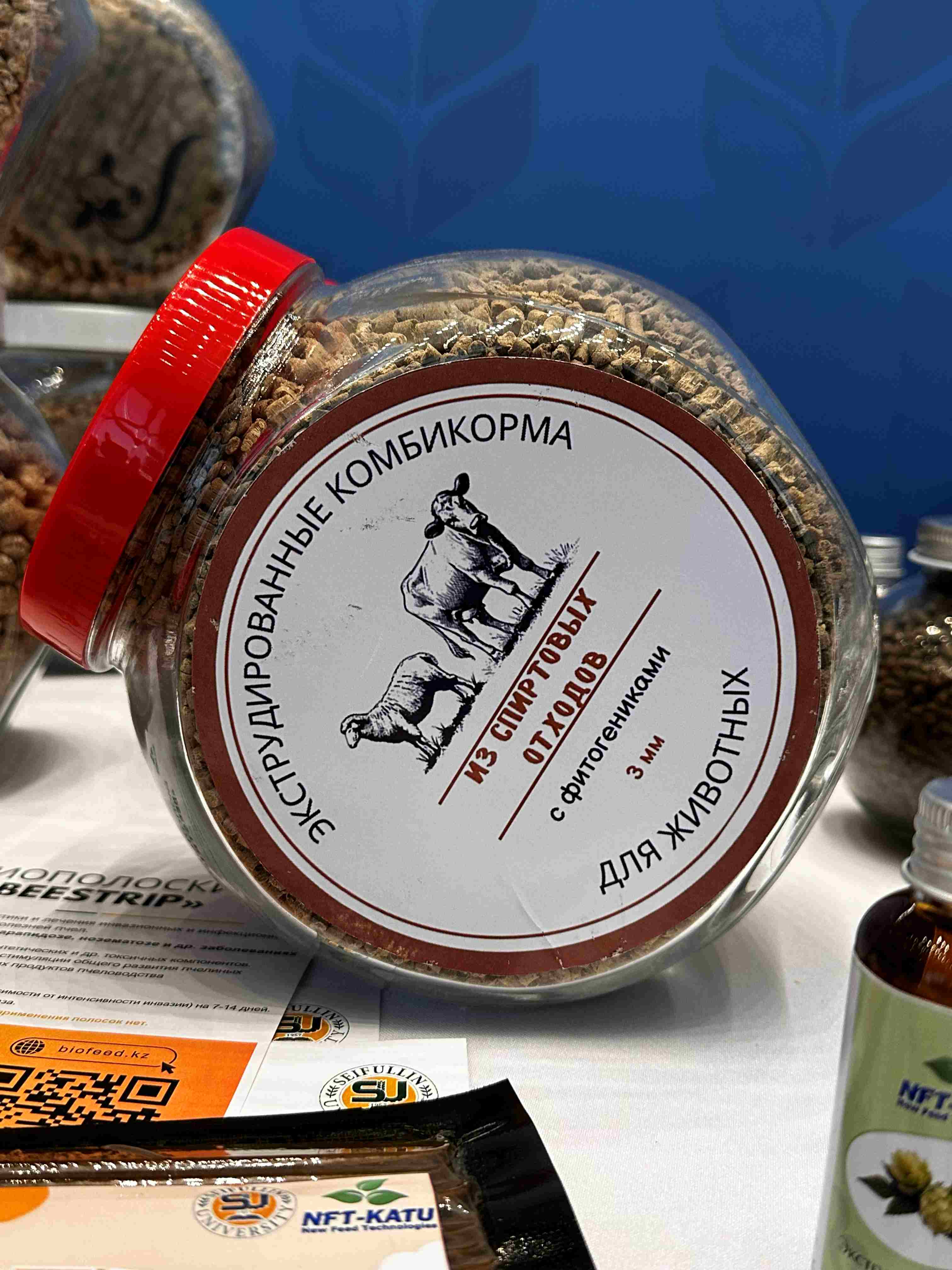
A patent of the Republic of Kazakhstan No. 37445 “Method for producing extruded compound feed with non-grade potatoes and phytogenics” was obtained;
Economic efficiency of non-grade potato utilization was determined;
At least two articles will be published in journals within the first three quartiles by impact factor in the Web of Science database or with a CiteScore percentile of at least 50 in the Scopus database.
Research team
The research team includes two scientific consultants – one international and one domestic – with extensive experience in veterinary and sanitary expertise, food safety, and the development of extruded feeds, feed additives, and phytobiotics.
Yuriy A. Balji – scientific consultant, Candidate of Veterinary Sciences, Professor, specialist in food safety. In recent years, he has led two projects under Budget Program 217 “Development of Science,” both receiving high evaluation scores. He also participated in three completed projects under Program 212 “Scientific Research and Activities in Agriculture and Environmental Management,” funded by the Ministry of Agriculture of the Republic of Kazakhstan. From 2015 to 2018, he participated in the international TEMPUS project. He has published over 260 scientific and methodological works, including textbooks, monographs, teaching manuals, production guidelines, and articles indexed in WoS and Scopus. He holds more than 60 patents, including Eurasian, Kazakhstani, and Russian patents. Several patents are licensed for extruded feed and feed additive production technologies.
Galia Zamaratskaia, PhD – international scientific consultant, Associate Professor at the Department of Molecular Sciences, Swedish University of Agricultural Sciences (ranked 24th in QS World University Rankings by Subject 2022). Food safety specialist, responsible for consulting on assessment of livestock products after feeding extruded feeds. Author of more than 150 scientific publications.
Project leader
Gulzhikhan T. Ismagulova – postdoctoral researcher, Master of Veterinary Sciences, h-index 1 (Scopus Author ID 57204944879, ORCID: https://orcid.org/0000-0002-3567-967X). Since 2013, she has participated in multiple scientific projects related to feed additives, food safety, and livestock productivity. Grant recipient: LLP “NFT-KATU”. Funding source: JSC “Science Fund”.