It is often used in cooking as an aromatic seasoning, in medicine to treat various diseases, and in aromatherapy for its calming properties.
Sage is a popular remedy in both ancient and modern folk medicine.
Sage contains essential oil, coumarins, alkaloids, flavonoids, saponins, sclareol, acids (folic, rosmarinic, ursolic, caffeic and chlorogenic), dihydroquercetin, rutin, coumarin, umbelliferone, gallic, chicoric and ferulic acids, and salts of K, Ca, Fe, Mn, Zn, Li and Sn. Polyphenols and phenolic and flavonoid glycosides have also been identified. The roots contain a highly active natural antioxidant, quinones, diterpenoids and diterpenes. Sage fruits contain fatty oil and sterols. Starch, protein, polysaccharides, opiate terpenoids, gums and oestrogenic substances have also been identified in the leaves.
The extract is rich in vitamins (A, C, E, B1, B2, B3, B4, B6 and B9) and minerals (calcium, iron, magnesium, phosphorus, potassium, sodium, zinc, copper, manganese and selenium).
In Central Asian folk medicine, sage flower infusion is taken for palpitations and to improve digestion. It is also used for colds and throat diseases and as a tonic.
In Bulgarian folk medicine, sage is used to relieve stomach and intestinal pain and to treat dizziness, epilepsy, hepatitis and kidney diseases. In Chinese folk medicine, it is used for rheumatism and chronic skin diseases. In Iranian folk medicine, sage roots are used for heart and kidney diseases and as a sedative. In Indian folk medicine, sage is regarded as an expectorant.
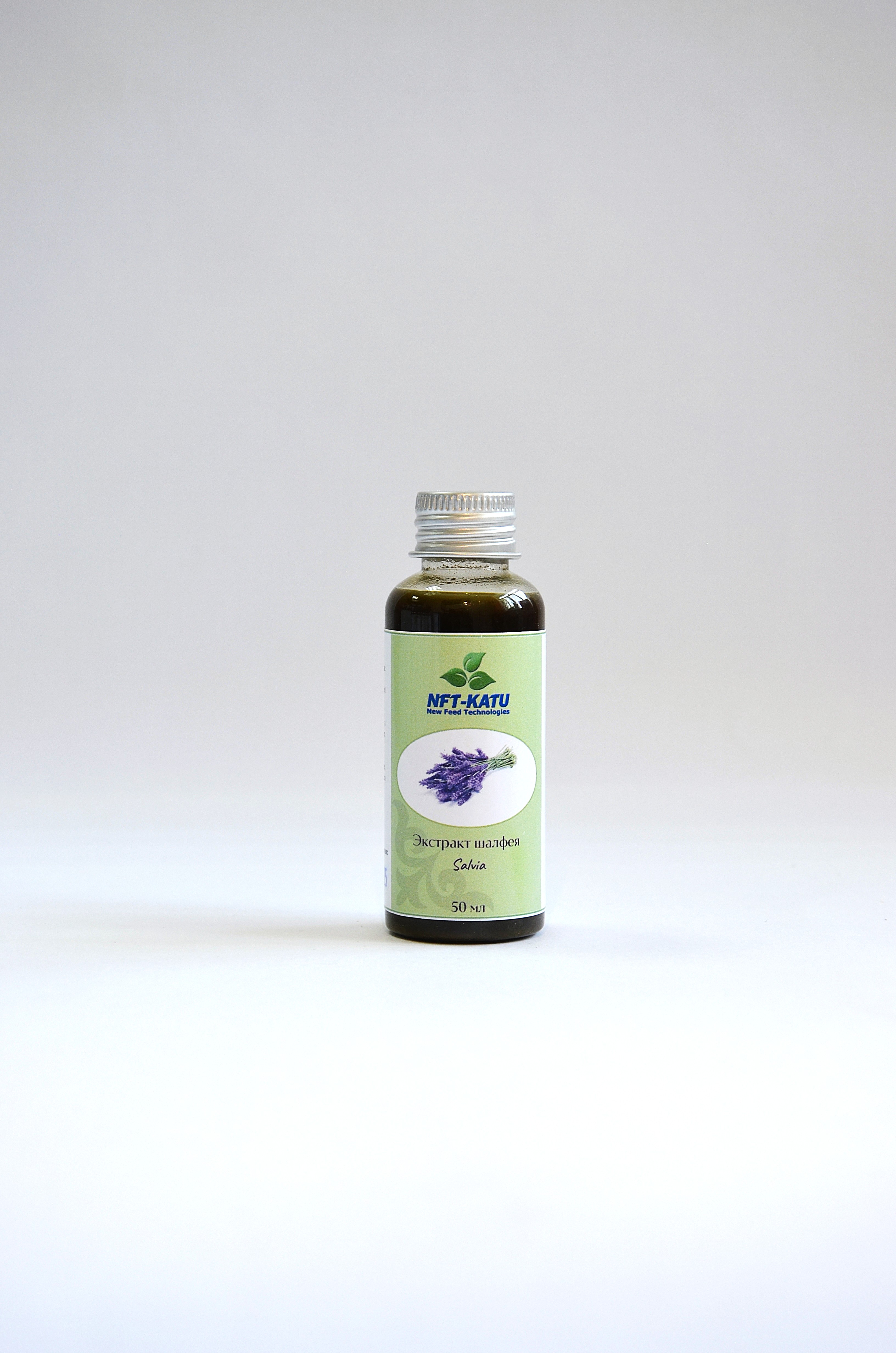
Use: Sage extract is used in various forms, including feed additives, drinking solutions and topical skin preparations.
Composition: 100% sage extract.
Shelf life: 2 years.
Storage: Store in a cool, dark place in a tightly closed container.