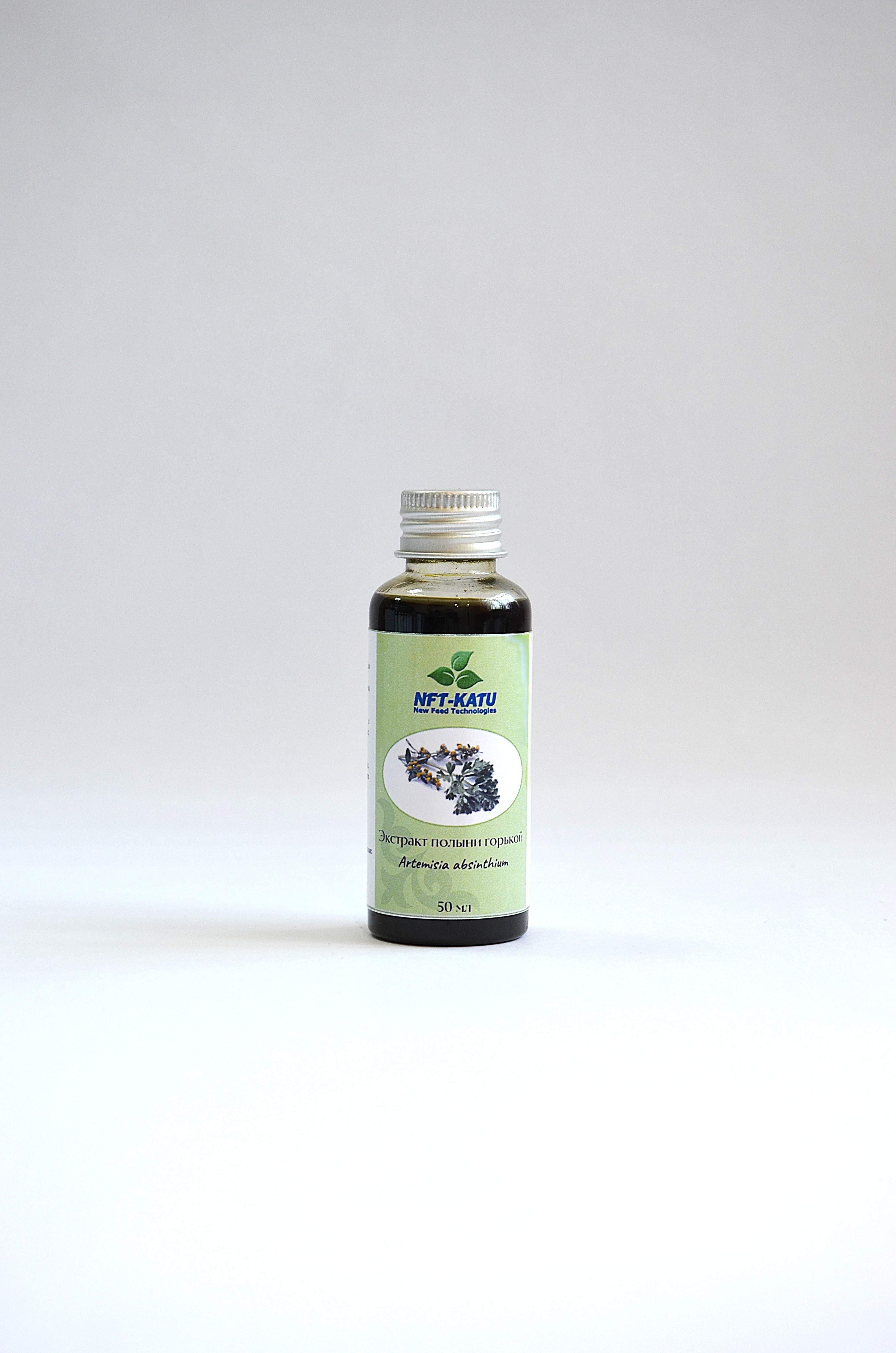
Wormwood tincture stimulates taste receptors in the mucous membranes of the mouth and tongue, reflexively increasing gastric juice secretion and digestion of proteins, fats and carbohydrates during the first 30 minutes after administration, improving appetite and digestion.
Active substances: sesquiterpene lactones – arsumin, absinthin, anabsinthin, matricin, α-santonin, ketopelenoside A, ketopelenoside B, oxypelenoside, artabin, artabsin, arabsin, artemitin, artamarin, artamaridin, artamaridinin, artamarinin, anabsin, artemolin, absintholide, isoabsinthin, artabsintholides A, B, C and D, arlatin, deacetylglobicin, artemisinin, artenolide, parshirin B and C; terpenoids – essential oils (thujone, thujol and phellandrene), α-pinene, β-pinene, camphene, camphor, chrysanthenyl acetate, β-myrcene, limonene, sabinyl acetate, ocimene, β-phellandrene, n-cymene, aromadendrene, β-caryophyllene, caryophyllene oxide, α-terpineol, geraniol, elemol, α-himachalene, α-cadinene, γ-selinene, bisabolene, thujyl alcohol, nerol, limonene, eucalyptol, gamma-terpinene, linalool and others; phenolic compounds – flavonoids (artemetin, quercetin, kaempferol, isorhamnetin, apigenin, quercetin 3-glucoside, rutin, isorhamnetin 3-glucoside and 3-rhamnosylglucoside, and others), lignans, coumarins (scopoletin and umbelliferone), phenolcarboxylic acids (2-caffeoylquinic, chlorogenic (3-caffeoylquinic and 4-caffeoylquinic)), and tannins.
Actions: strong anti-inflammatory; choleretic (stimulates bile secretion and gallbladder emptying); bactericidal (shows schizonticidal activity against chloroquine-sensitive Plasmodium berghei strains); fungicidal; insecticidal; anthelmintic; anticonvulsant; antispasmodic (relieves smooth-muscle spasms). It stimulates gastric hydrochloric acid production, improves digestion and appetite, provides topical analgesia, promotes proliferation at mucosal lesions and supports wound healing (the oil extract accelerates epithelialisation and healing of thermal and chemical burns without dense scarring). It has hypothermic effects (reduces temperature during fever), stimulates non-specific immunity (reticuloendothelial functions and phagocytosis), increases peripheral blood haemoglobin, erythrocytes and leukocytes, and has diuretic, antiallergic (antihistamine, inhibiting histamine release) and antitoxic effects (in mercuric chloride poisoning). It has pronounced hepatoprotective effects in acetaminophen- and carbon tetrachloride-induced toxic hepatitis, preventing elevated transaminases and reducing liver damage. It inhibits microsomal enzymes involved in xenobiotic metabolism, has antitumour effects, including against B16 melanoma (improving efficacy, reducing antineoplastic toxicity and showing antimetastatic activity), and improves intestinal blood supply, enzymatic activity and absorption.
Composition:
Active ingredient: wormwood herb and leaves, 300 g;
Excipient: ethanol (ethyl alcohol) 70%, a sufficient quantity to obtain 1000 mL of preparation.
Manufacturing method:
4 extraction cycles in a Soxhlet apparatus.
Recommended use:
Adult cattle: 4–8 mL;
Calves up to 6 months: 2–4 mL;
Goats and sheep: 1–2 mL.
Administer the extract diluted in water twice daily for 5–7 days.
Price: alcohol extract – 500 tenge; oil extract – 250 tenge per 50 mL bottle.