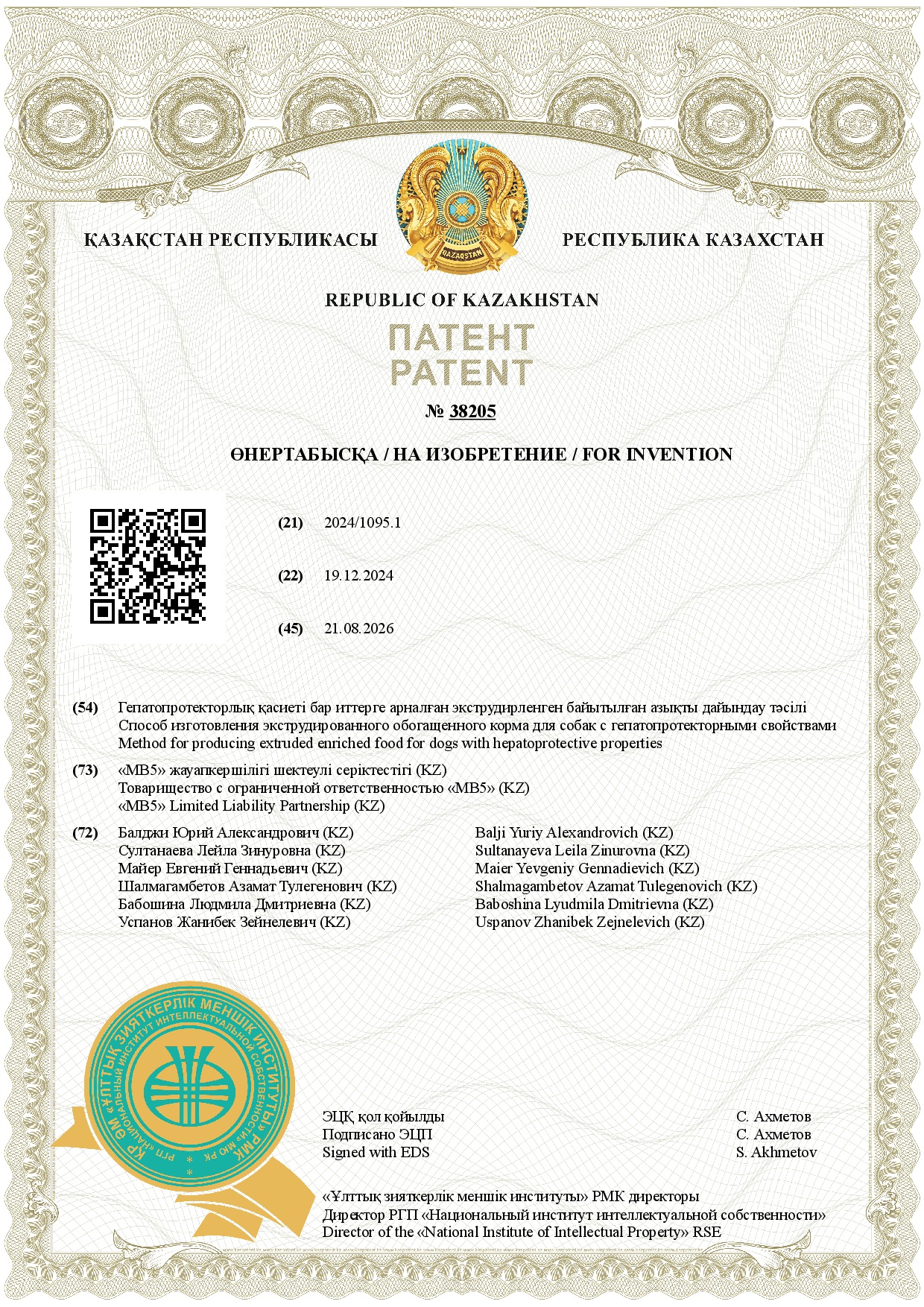
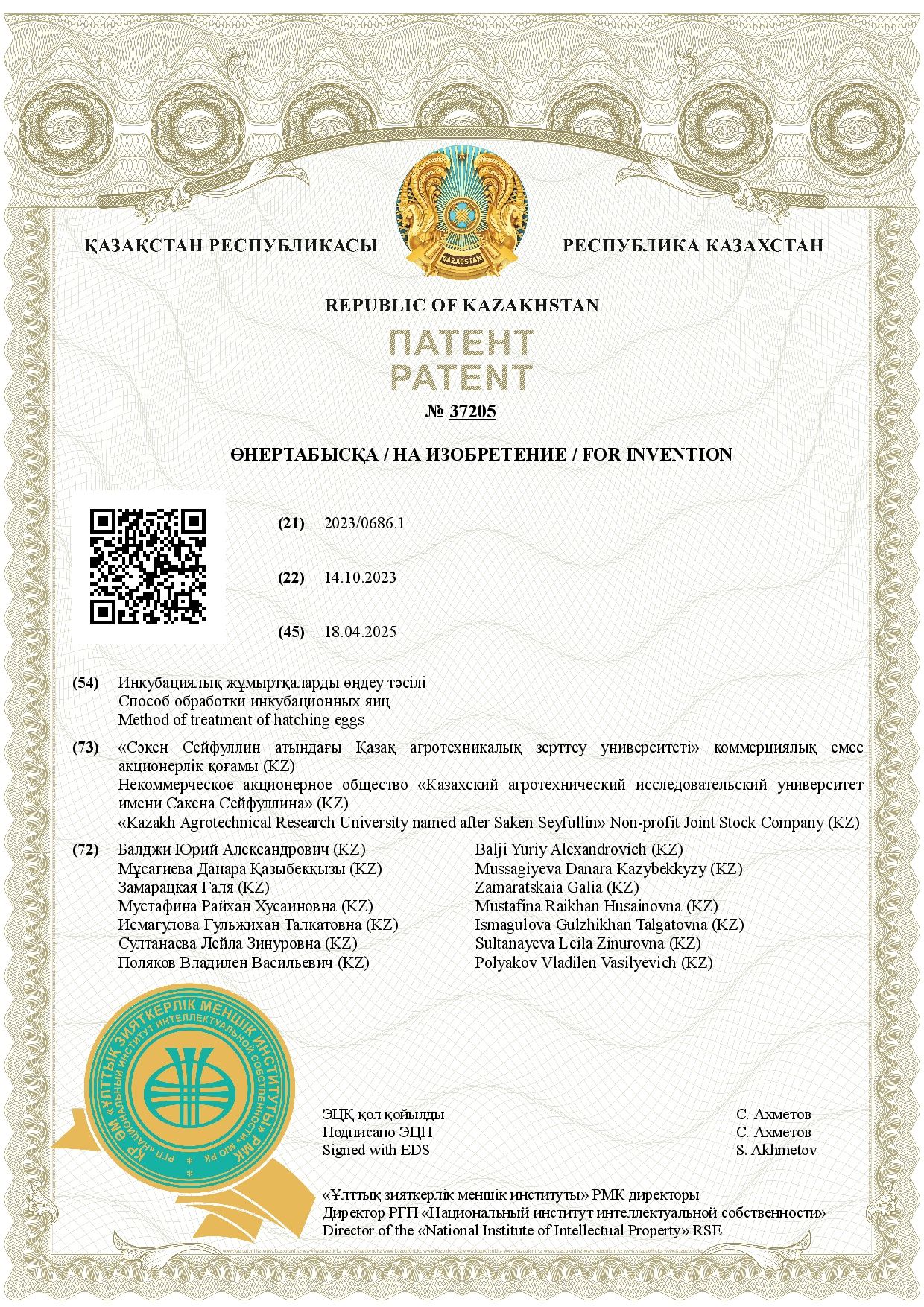
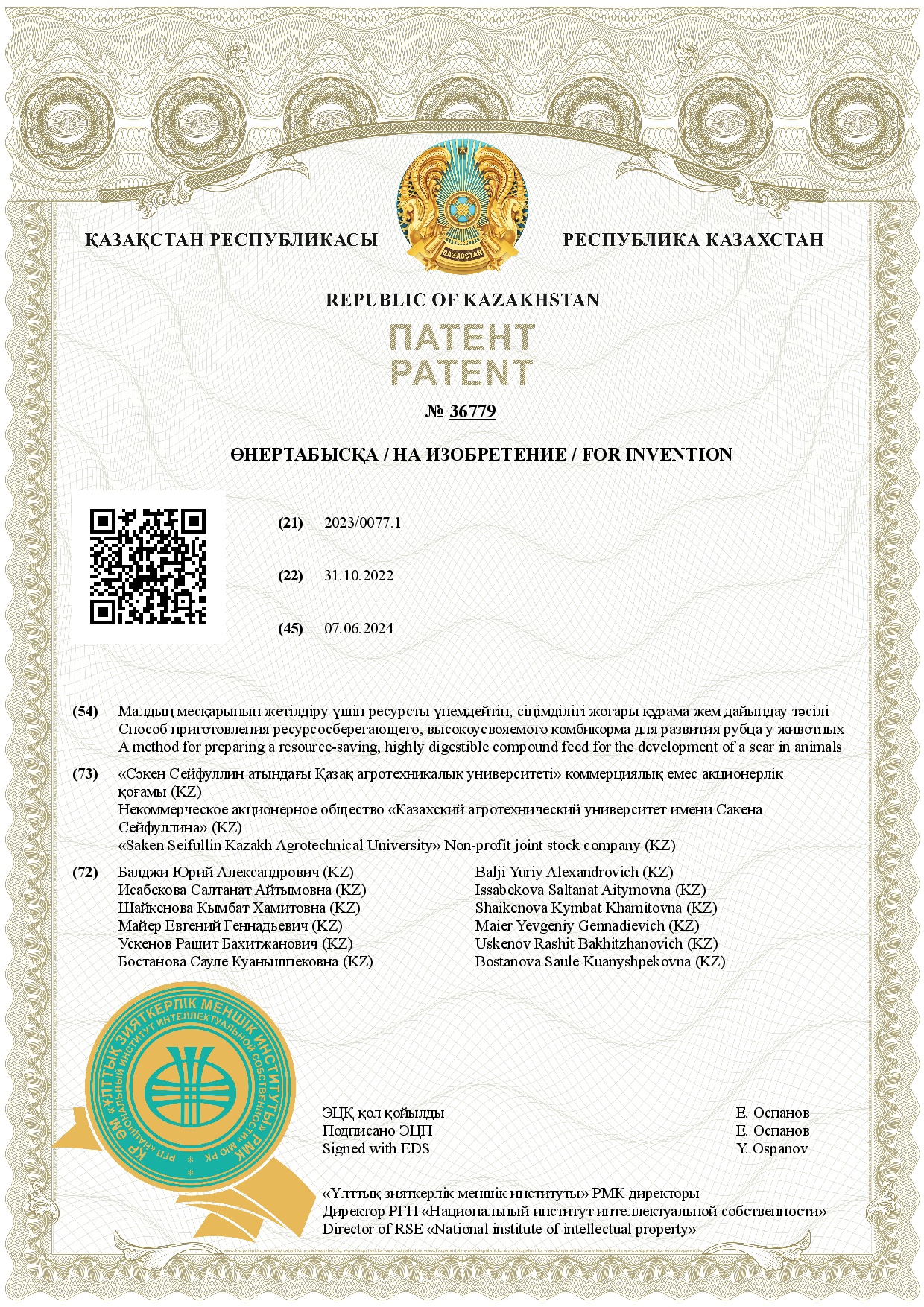
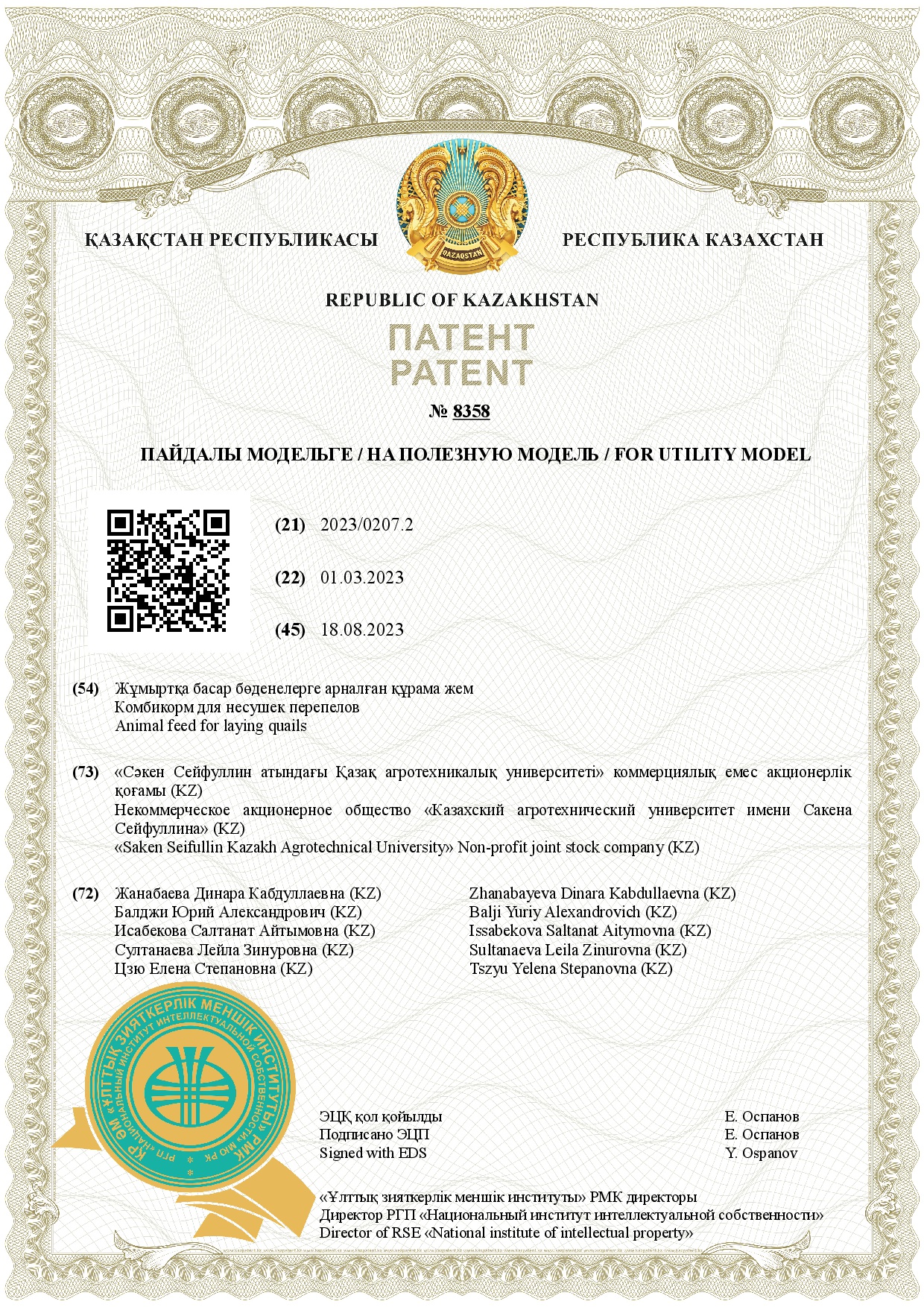
Publication date: 13.12.2024
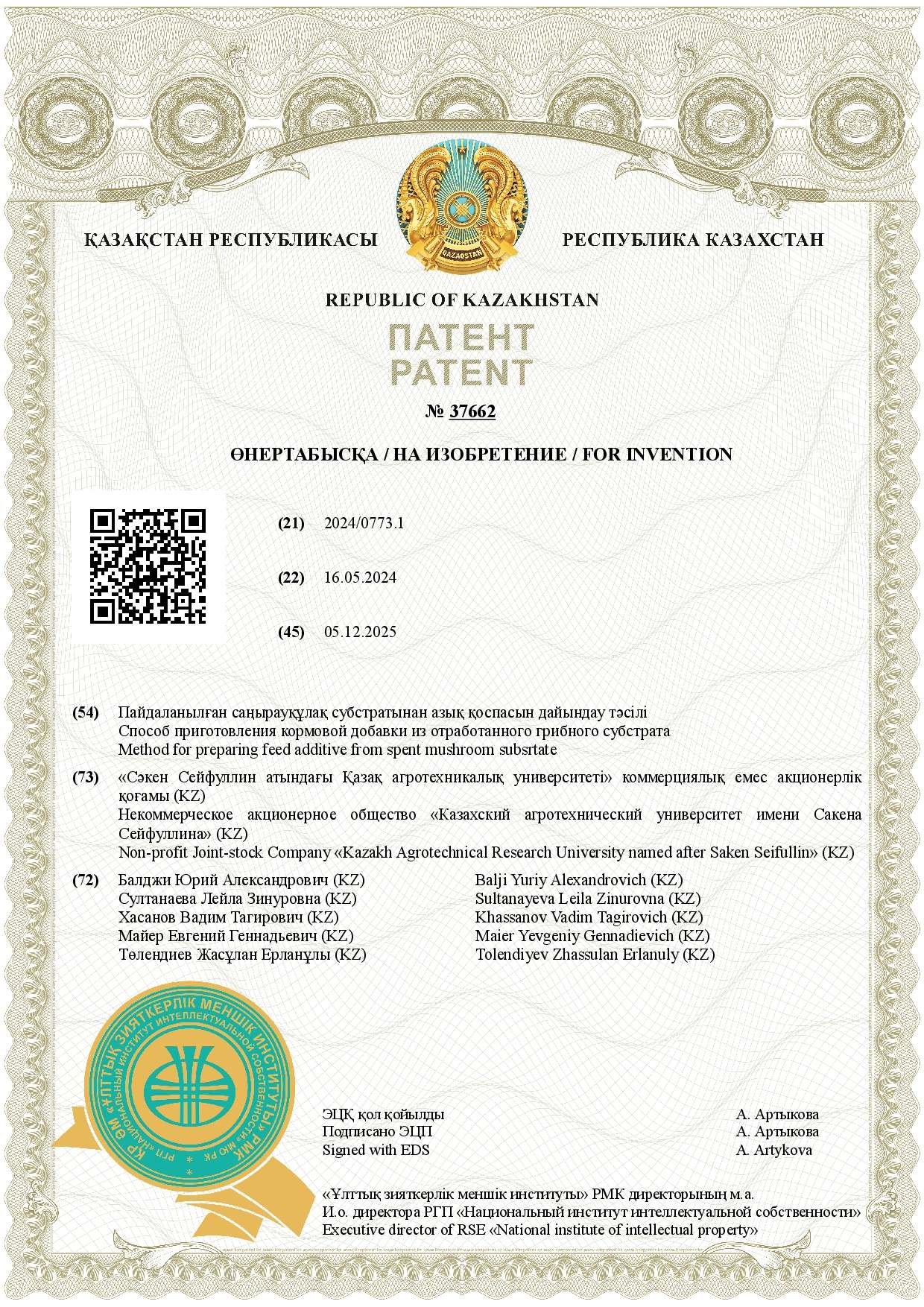
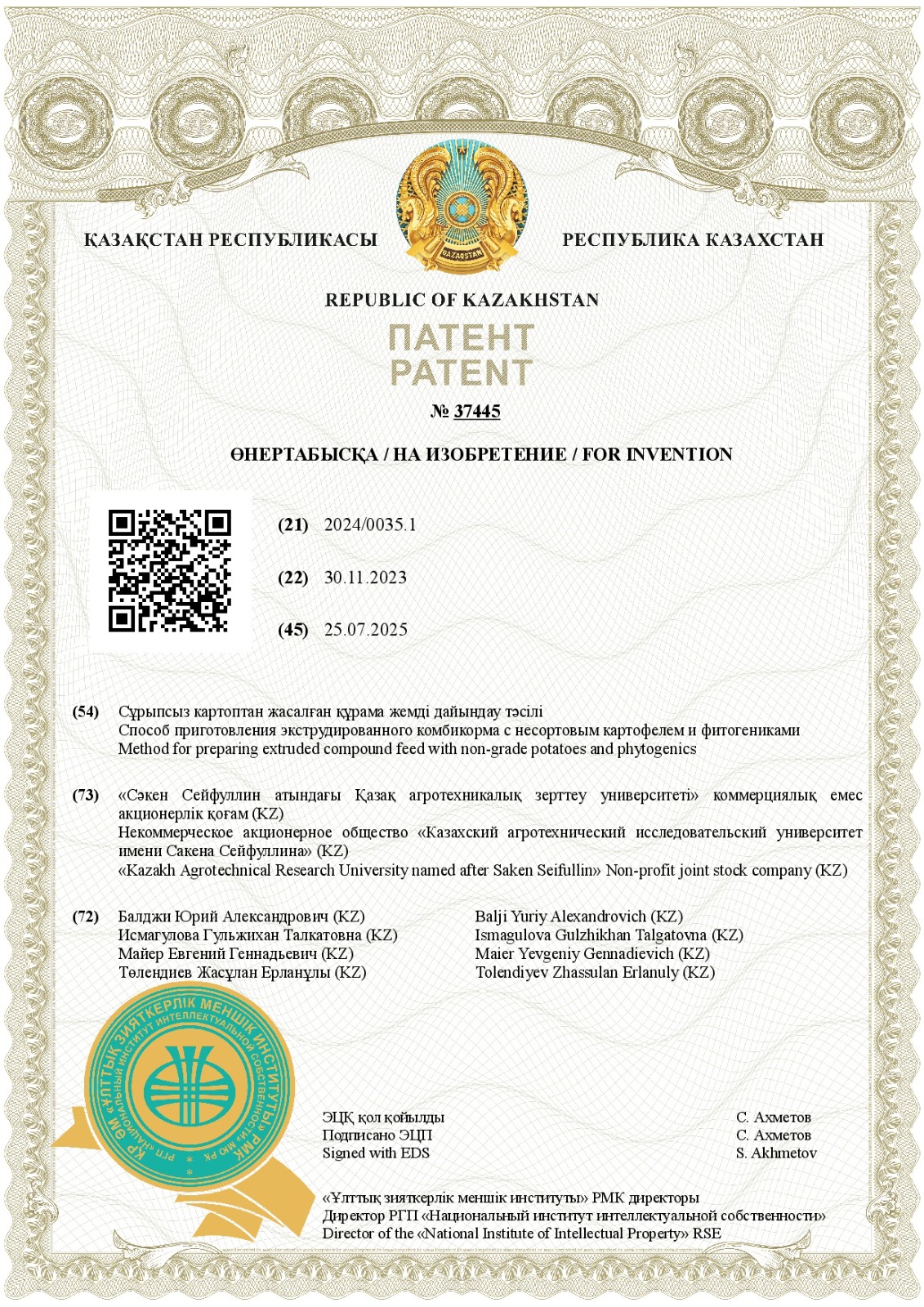
Patent holder: NJSC “S. Seifullin Kazakh Agro Technical Research University”
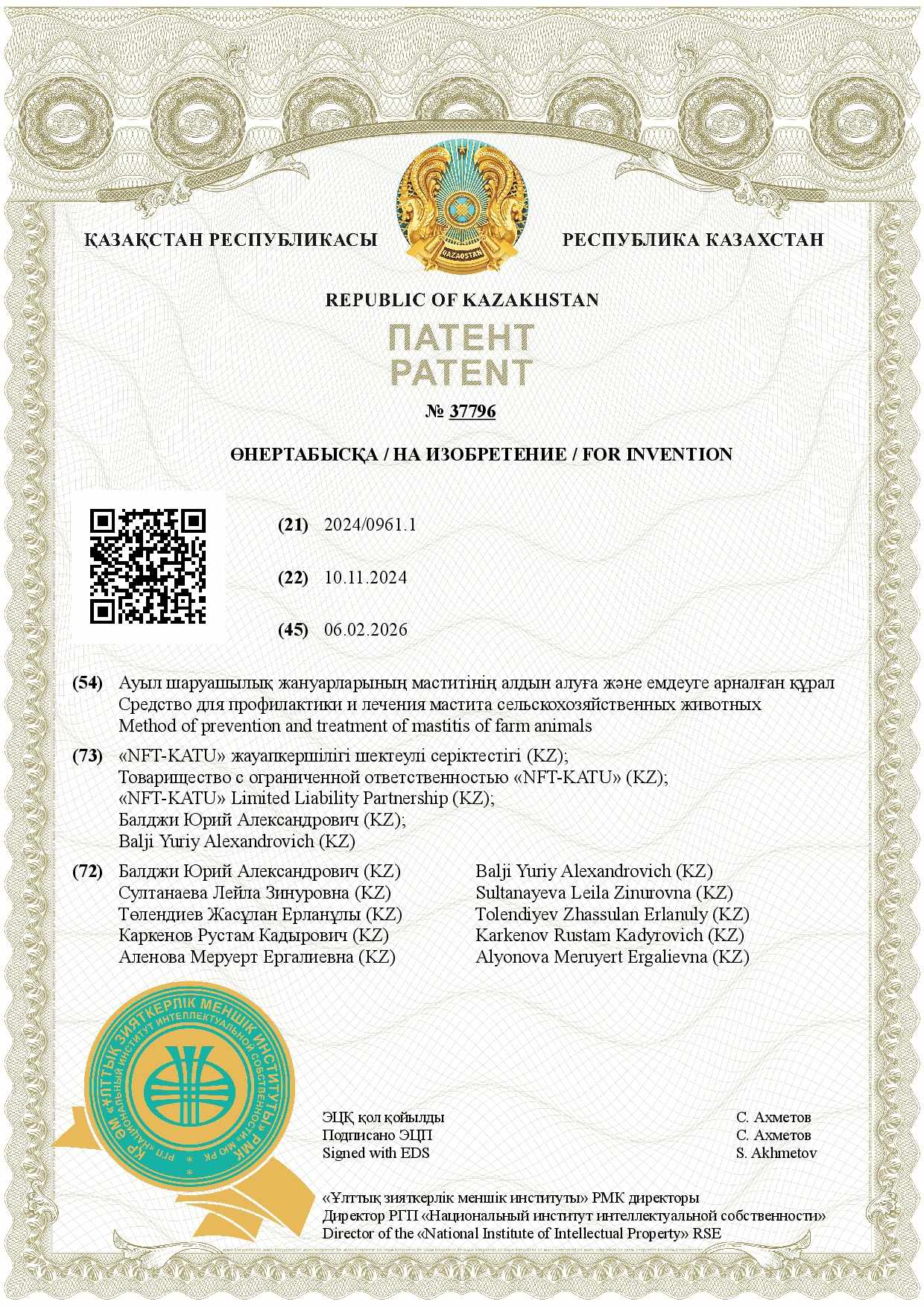
The utility model relates to agriculture, namely to compositions of feed additives, methods for their production and feeding for the treatment and prevention of mastitis, as well as for increasing the milk productivity of cows.
The technical result of the utility model is achieved by preparing a feed mixture, enriching it with the phytobiotic “BioFeed-P” and bitter wormwood extract. Crushed barley, oats, wheat, peas, or an extrudate prepared from these crops are used as the grain mixture.
The essence of the utility model consists in using 0.01% of the phytobiotic “BioFeed-P” in combination with 0.02% of bitter wormwood extract, which are added to a crushed grain mixture consisting of barley, oats, wheat, and peas, serving as a filler of the feed additive, or added to a grain mixture with these components followed by extrusion to obtain a granulated feed additive.
The use of an extruded grain mixture as a feed base improves the taste and aroma of the finished product, while digestibility is improved by up to 95%. In addition, during the extrusion process, disinfection of the initial raw materials from microorganisms, microscopic fungi, and present mycotoxins occurs.
The composition of “BioFeed-P” includes the following compounds: terpenoids; carboxylic and fatty acids (stearic, oleic, palmitic, etc.); flavonoid fractions (pinostrobin, pinocembrin, quercetin, tectochrysin, chrysin, apigenin, etc.); flavonoid glycosides (isorhamnetin-3-O-rhamnoglucoside, isoquercitrin, quercetin-3-O-D-glucoside, quercetin-3-O-rhamnoglucoside and isorhamnetin-3-); essential oils; resins; tannins; lactones; phenolic acids; trace elements (zinc, manganese, cobalt, copper, iron); iodine; carbohydrates; amino acids; vitamins (A, C, P, E); prostaglandins and other components which, during the digestion process, make it possible to achieve a therapeutic and preventive effect, strengthen the immune status of the animal organism, improve metabolic processes, and lead to an increase in milk productivity of cows.
Bitter wormwood extract contains phytochemical compounds, namely lactones, terpenoids, essential oils, organic acids, resins, tannins, and phenols, due to which it exhibits antimicrobial, antiviral, hypoglycemic, hepatoprotective, wound-healing, anti-inflammatory, anthelmintic, acaricidal, and antimalarial effects.
The additive is fed both separately and together with the feed mixture used on the farm.
The utility model is explained by the following examples.
Example 1.
For the experiment, a group of cows diagnosed with mastitis by the California Mastitis Test was formed, n=15.
Before the start of the experiment, in this group of cows the average fat content was 4.2±0.49%, the somatic cell count in 1 ml of milk was 402.11±106.68 thousand, and the average daily milk yield was 37.97±2.21 liters.
The ready extruded feed additive consisting of an extruded mixture (barley, oats, wheat, peas), 0.01% of the phytobiotic “BioFeed-P”, and 0.02% of bitter wormwood extract was fed daily at a dose of 200 g per head together with the main ration.
The study of the effect of the feed additive was carried out for two weeks.
The research results showed that milk productivity of animals (daily yield, kg) increased from 37.97±2.21 to 40.82±2.17 liters, which is 7.9% higher.
Milk composition was studied before and after the experimental period. Among physico-chemical indicators, fat, protein, lactose, solids-not-fat content, density, acidity, pH, and somatic cell content were determined.
As a result of the studies, in the experimental group the fat percentage increased from 4.2±0.49 to 4.56±0.37, indicating an increase of 10.4%; in other indicators practically no changes were observed: protein – 3.1%, SNF – 8.75±0.09 to 8.73±0.12, protein 3.22±0.01 to 3.21±0.03%, lactose 4.78±0.05 to 4.77±0.07%.
The average somatic cell count in the experimental group decreased from 402.11±106.68 to 127±6.36, which means a reduction of 68%.
Example 2.
To produce 100 kg of the feed additive, barley, oats, wheat, and peas were ground in equal proportions using a PP-2000 pneumatic grinder. The components were mixed in an SG-800 mixer for 3 minutes with simultaneous addition of 0.01% of the phytobiotic “BioFeed-P” and 0.02% of bitter wormwood extract.
The prepared mixture was fed daily using a feed distributor at a rate of 7 kg per 35 cows for 14 days.
Thus, the use of a feed additive enriched with natural phytobiotics makes it possible to have a positive effect not only on qualitative but also on quantitative indicators of milk from cows affected by mastitis.
Example 3.
To produce 100 kg of the feed additive, barley, oats, wheat, and peas were ground in equal proportions using a PP-2000 pneumatic grinder. The components were mixed in an SG-800 mixer for 3 minutes with simultaneous addition of 0.01% of the phytobiotic “BioFeed-P” and 0.02% of bitter wormwood extract, extruded on a PE-350 extruder at a temperature up to 150 ℃ with a granulating unit equipped with an 8 mm die, after which the obtained granules were cooled using a cooler or at ambient temperature.
The ready granulated feed additive was fed using a feed distributor at a rate of 7 kg per 35 cows for 14 days.
The use of the phytobiotic feed additive BioFeed-P in combination with bitter wormwood extract as part of a crushed or extruded mixture restores milk productivity of cows affected by mastitis, reduces the somatic cell count, and makes it possible to obtain high-quality and safe milk.
For discussions regarding the transfer of rights and the conclusion of a license agreement for this patent, please contact the Commercialization Office of NJSC “S. Seifullin Kazakh Agro Technical Research University”, Astana, Zhenis Avenue, 62, office 1302.
Tel.: +7 (7172) 39-39-19,
e-mail: dpk_katiu@mail.ru,
or phone: +7-701-979-67-98.